GAME DESIGNER / LEVEL DESIGNER / PROTOTYPER
My name is Nicolas Biakou, a graduate specialized in Game Design, Level Design and prototyping.
Below you'll find my portfolio showcasing some of my game development work.
PROJECTS
Three projects, three genres, three approaches to game design

Roguelite with fully destructible tiles, equipment systems and heat management
View project β
Musical beat'em up / party game coop up to 4 players, inspired by Mars Attacks
View project β
Gamified personal assistant with animated 3D character, AI integration and cross-platform
View project βPROJECT 01

Fiona Volcano is a roguelite in the tradition of "Digger" games (Dig Dug, Mr Driller, Motherload). The player embodies Fiona, a gold-hungry explorer who ventures into the depths of an active volcano to plunder a dying king's treasures. The environment is made of 100% destructible tiles, every run is unique: manage the heat, collect resources, gear up, and most importantly⦠know when to run.
Mine tiles, collect treasures and relics
Eruptions, heat, escape
Rhythm game to protect your loot
Hub, shops, auctions
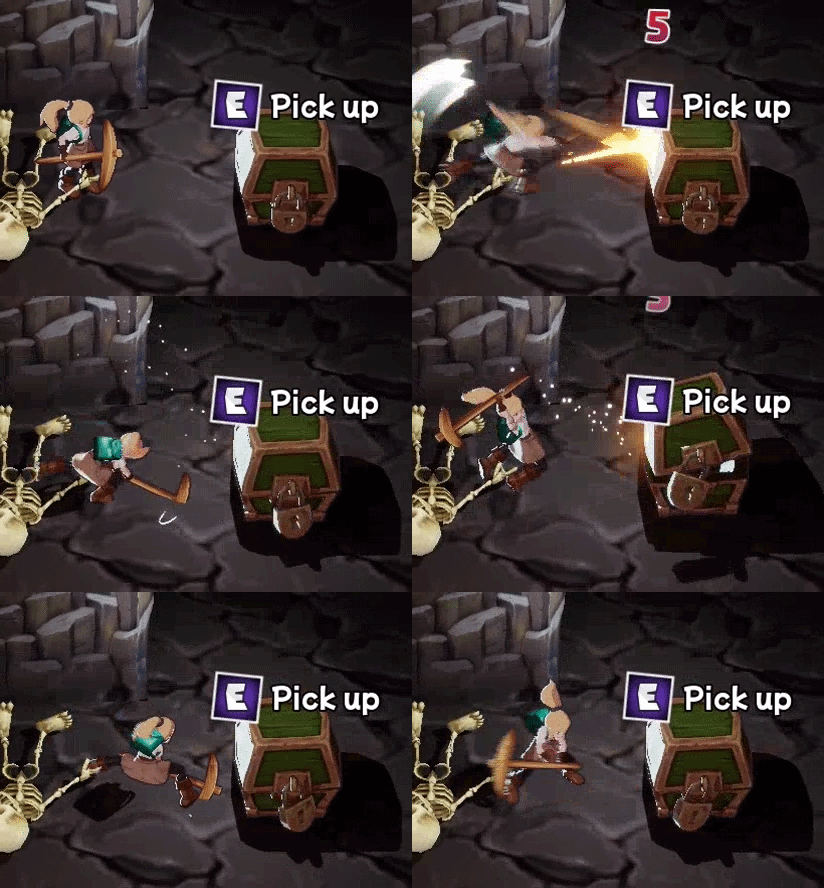
Fiona hitting a chest to retrieve its contents
Affects movement speed and item pickup speed.
Determines the ability to carry heavy items and slightly increases damage.
Determines Fiona's heat resistance.
Increases the probability of finding rare items.
Prestige: A "situational tool" based on equipped gear. High prestige unlocks luxury areas (auctions) but raises prices at basic merchants. Low prestige does the opposite, granting fairer prices but closing the doors of upscale districts.
No UI timer displayed on screen. The volcano communicates danger through organic environmental escalation.
Distant rumbling. The player freely and serenely explores the galleries.
Tremors, visible glowing cracks. Often misleading signs maintain doubt.
Active lava, flying debris, intense music. Seriously consider fleeing to the exit.
Explosive pyroclastic flow through fissures. Final sprint and rope QTE to reach the surface.
The player never knows exactly when the eruption will strike. The constant doubt creates tension that pushes toward risky decisions: "one more chest⦠or do I run?"
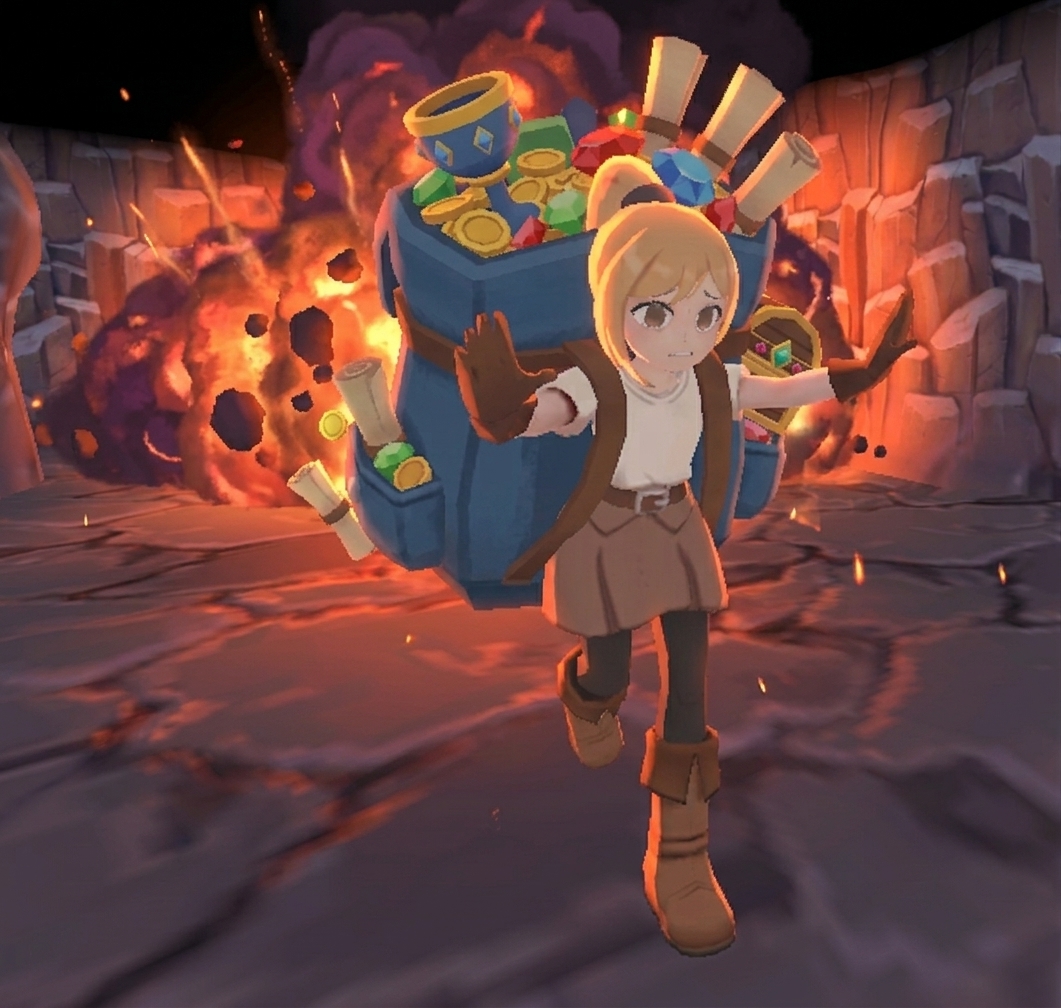
Fiona fleeing a volcanic eruption
The backpack lies at the heart of every decision. Each treasure picked up is a conscious bet on your ability to escape.
Every item has real weight. The heavier the backpack, the slower Fiona flees. She can counteract this with "Bowling Mode", which maintains speed with many items on her back, but at the cost of control.
Exceeding base capacity drastically increases the risk of the backpack exploding at the slightest impact.
A large enough backpack gaining speed becomes a devastating wrecking ball that crushes everything in its path.
Emergency mechanic: open the backpack in-game to throw loot and lighten the load very quickly.
Bowling Mode: Fiona uses her backpack as a devastating weapon
Safe zone between each run. It contains several key points of interest essential for preparing the next descent.
Permanently store your treasure in a safe place between expeditions.
Sells standard common equipment (basic tools, basic backpacks, water supplies).
Buys, sells and identifies magic relics and unidentified items found during runs.
Sell very expensive items and buy very rare ones. Access requires a high prestige level.
The auction system is a social and economic mini-game designed to enrich the experience beyond the core loop: balance the economy by limiting fast enrichment, and control access to end-game items otherwise unobtainable.
Before the auction starts, a board displays all items for sale. The player can browse NPC lots and add their own. A key moment to strategically decide what has the most potential today.
Once launched, items are presented one by one. The player can choose to bid to buy, or simply observe reactions when one of their own rare items hits the table.
The player and NPCs take turns bidding. The player can read the room (exclamations, whistles) and target specific collectors. A high prestige score can intimidate competing buyers, pushing them to withdraw.
At the end of a successful run, an optional rhythm mini-game triggers. Fiona dances surrounded by her loot to impress the villagers. A successful performance (musical QTE) convinces the delighted crowd to throw tips and rare bonus items directly onto the stage.
Each dungeon creature has a function that integrates deeply into gameplay. Enemies are not simple obstacles to "fill" the map β they interact with core mechanics (heat, items, treasures) and force tactical choices.
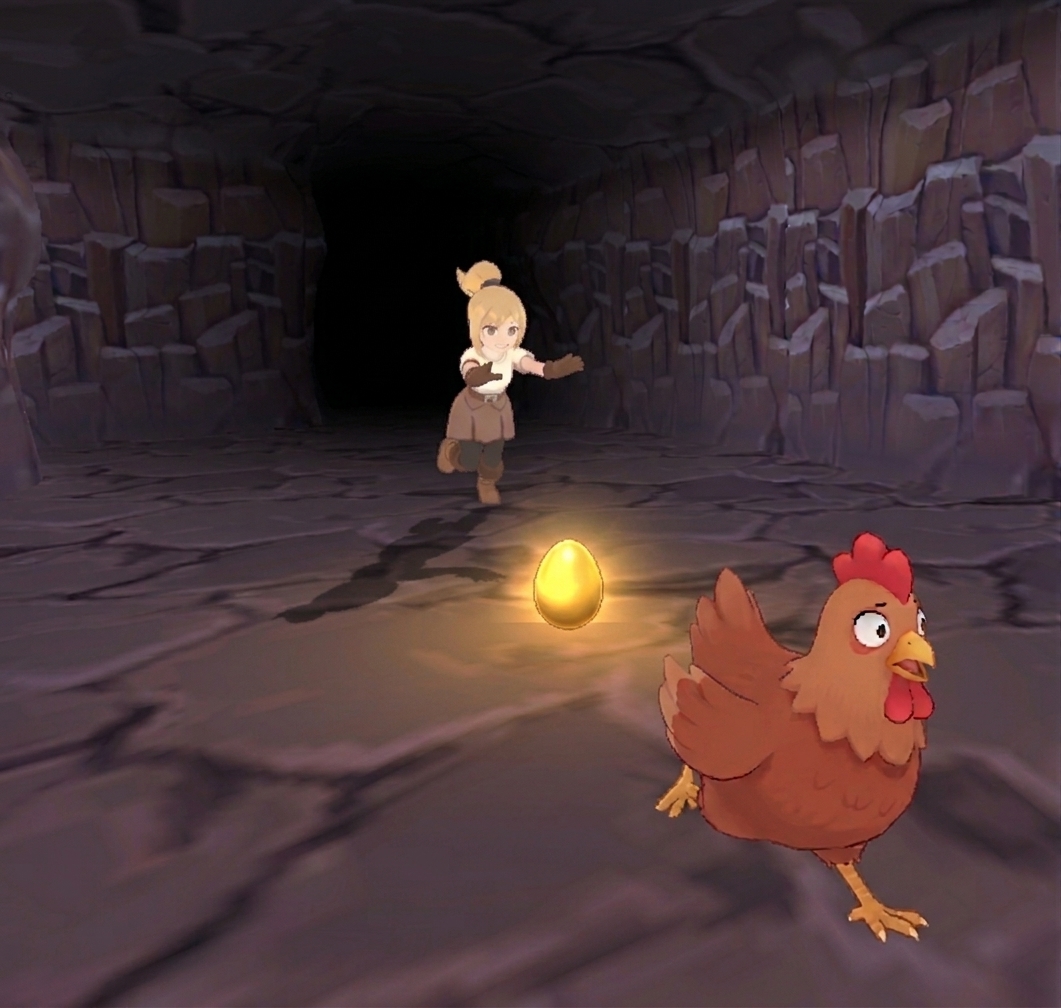
Lays valuable eggs while fleeing. Pushes the player toward greed, luring them into very dangerous zones.
Drastically raises the temperature around it, directly interacting with the volcano's lethal heat system.
Interacts with treasures by stealing items from the floor. Forces the player to prioritize pickup to protect their precious loot.
Generates deadly glacial cold. Paradoxically, its aura zone can serve as a makeshift refuge during a global heat eruption.
Mimics the appearance of treasures. Forces the player to visually analyze each chest carefully instead of opening blindly.
Capable of destroying walls impassable for Fiona. Can be deliberately lured by the player to open a secret passage to treasures.
Without a time or physical constraint, the player mines endlessly. Rising heat forces continuous balance between greed (progress) and fear (survival).
A single optimal tool made exploration monotonous. The balancing solution: Pickaxes deal +100% on walls, Mallets +100% on chests, Swords +250% on creatures.
Every descent into the volcano is unique. The terrain is generated by a multi-layer procedural system based on stacked Perlin Noise, combined with hand-crafted levels ("presets") that are weighted into the grid.
Defining spawn points for hand-crafted structures (treasure rooms, temples, corridors). Each preset has a weight (0 to 1): at 1 the tile is placed as-is, at 0 procedural generation takes over.
Four noise parameters combine to determine the biome: Depth (linear gradient), Porosity (clearings), Temperature (magma) and Humidity (water). Examples: Humidity + Temperature = Hot Springs, Porosity + Humidity = Underground Forest.
Smart placement based on generated topology. Treasures are placed where they reward curiosity: isolated caves, dead-end corridors, islands in lava lakes, behind hard rock walls.
Treasure placement is not random. The system analyzes generated terrain topology to identify points of interest (dead ends, isolated cavities, obstacle-surrounded islands) and concentrate rare rewards there. Players who explore beyond the obvious path are systematically rewarded.
Hidden rooms with high treasure concentration. The goal is to find them.
Precious treasures surrounded by water, lava or monsters. High risk, high reward.
An almost guaranteed treasure at the end of each long corridor. Perseverance is rewarded.
Near-impenetrable walls, traps, and a cruel choice: taking one item locks out the others.
Creating a level preset in the editor
PROJECT 02

Beat'em Up / Musical Party Game Β· Unreal Engine Β· Coop 2β4 players
Aliens are invading Earth, but they have one weakness: they can't stand music! Attack the aliens when the music plays, and hide when it stops. Problem: there aren't enough hiding spots for everyone. An explosive mix of beat'em up, musical chairs and party game.
Attack aliens to the beat
Anticipate the music stopping
Find a spot, push the others out
Trigger sonic attacks
Players cooperate against aliens but compete for hiding spots. An eliminated player returns as a robot: they can help OR sabotage their teammates.
Surviving without hiding is risky but power accumulates without reset. High risk, high reward.
All players must press simultaneously to launch the bomb. If even one refuses, it fails. Creates moments of social tension.
Some weapons only deal damage on the tempo. Consecutive on-beat hits multiply damage. Gameplay meets music.
PROJECT 03

Gamified Personal Assistant Β· Godot 4 + Python + Gemini AI
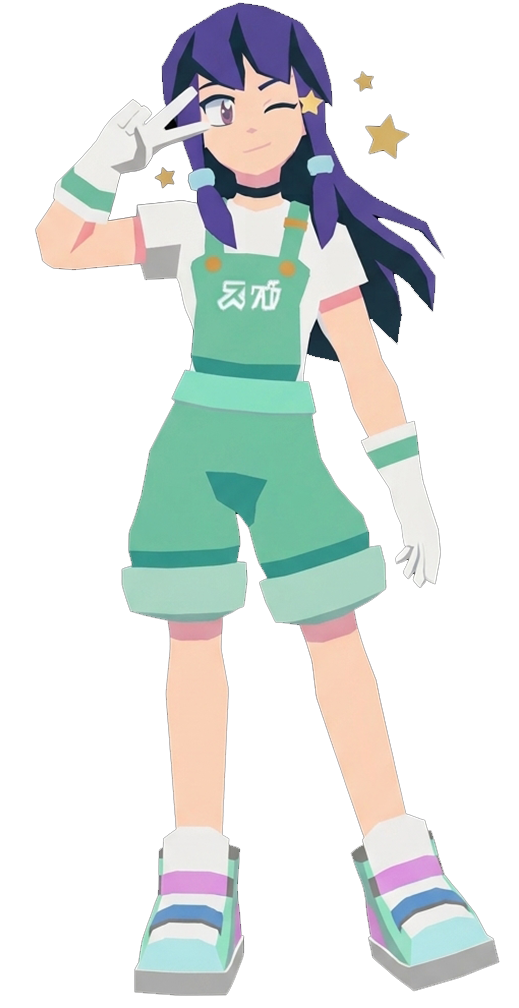
FocusPals is a gamified productivity assistant. An animated 3D character (Tama) lives on the user's desktop, helps them work through timed sessions, reacts vocally via AI (Gemini Live API), and syncs between desktop and mobile. A project fusing game design, AI and UX.
The application relies on pure game design mechanics to turn procrastination into a playful experience and reward sustained effort over time:
The AI (Tama) evaluates you in real time via 3 gauges: Alignment (are you on task?), Suspicion (are you doing something else?) and Trust. If you get distracted constantly, Tama's Trust decreases: her Suspicion will rise almost 2x faster and she'll become much less forgiving. A real dynamic tension gauge!
Work time and completed tasks feed a long-term memory (calendar heatmap). You unlock Achievements and earn new exclusive Titles. This tangible feedback creates an engagement loop and gives a strong sense of progression.
No classic window. Tama lives on the desktop, the user interacts with a 3D character, not an app. Game design serves UX.
Tama appears immediately when called, independently of the backend. The visual must never wait for the network: responsiveness first.
Tama's mood decays organically. No script: behavior emerges from systems (alignment, suspicion, mood decay).
BACKGROUND
Alternative DΓ©veloppement (AD TV)
Cosmo AV
LISAA Paris
UCO Laval